ScaleSling
Launch dragons into troll fort supports and watch how each structure falls.
- Session
- Short physics levels
- Controls
- Click or drag to aim the sling
- Best for
- Skill
Landscape gives you more room
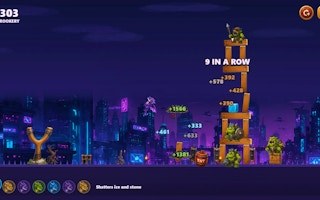
Aim a dragon at the fort
ScaleSling
Click or drag to aim the sling
Play loads a game hosted by GamePix that may show ads and use cookies.
Provided by GamePix. Ads and cookies may load only after you press Play. Read the GamePix Privacy and Cookie Policy.
Enter the first level and inspect the fort, trolls, and supporting pieces.
How to play
How to Play ScaleSling
Look for the piece that holds the fort together, line up a shot, then wait for the entire structure to settle before judging the result.
- 01
Press Play and begin the first available level. Locate the sling, each troll, the blocks beneath them, and any narrow connections between parts of the fort.
- 02
Choose an impact point. A support under several pieces may be more valuable than the nearest visible troll.
- 03
Use the mouse or touch control to aim the sling toward that point, then launch one dragon. Follow the trajectory and the resulting collapse.
- 04
Read the score and remaining targets after movement stops. If a troll survives, aim the next shot at the new structure rather than repeating the first trajectory blindly.
- 05
Retry a level when your remaining shots cannot clear the fort, changing one aim point at a time so you learn which support mattered.
About the game
Aiming is only half the puzzle
ScaleSling puts a dragon on a sling at one side of a small scene and a troll fort on the other. You launch toward the structure, trying to bring down the troll targets with a limited series of shots. The opening stage, First Light, has a compact tower that makes the physical idea easy to read. The interesting question is not simply whether you can hit a troll directly. Wood, stone, ice, and the way they support one another make the fort itself part of the target.
A useful first shot strikes a support rather than the outer edge of the fort. A large collapse can still leave one troll protected or balanced on a surviving piece, so inspect what remains before using another dragon. Score is helpful feedback, but the level objective depends on the troll targets actually falling. The official listing describes 24 levels across four worlds and a three-star result; use the fort currently on your screen to decide the next impact point.
Controls
Controls for ScaleSling
- Mouse or touch
- Aim toward a point on the fort and launch the dragon.
- Level controls
- Start or retry a stage; follow the current in-game prompt.
Useful strategy
Make each dragon count
- Trace the load-bearing path from the highest troll down to the ground before aiming.
- Watch a full collapse; a slow falling piece can clear a target after the initial hit.
- Prefer a clear support over a blocked troll when a direct path is poor.
- If one troll survives, re-evaluate the changed fort rather than replaying the original shot.
- Compare a low support hit with a high side hit on separate retries to learn the structure.
- Treat the score as feedback, while remaining trolls determine whether the objective is complete.
Read the fort as a connected structure
Begin at the troll you want to dislodge and look downward. Which piece is directly under it? What supports that piece? A narrow vertical column may carry more of the fort than a large decorative block near the edge. A shot into the base of that column can make several upper pieces fall, while a shot into an isolated piece may produce an impressive bounce without moving any target. This is a physics puzzle, so the way blocks touch and balance matters as much as the distance to a troll.
Do not assume every material reacts alike. The official game description calls out wood, stone, and ice supports. The current stage may combine them differently, and a material may be hard to move by one kind of impact. Look at its position first: even a stubborn block might be shifted indirectly if something beneath it collapses. If a material behaves unexpectedly, observe its response rather than inventing a fixed rule for every future level. The useful conclusion is local: this particular shot did or did not remove a useful support.
When several trolls stand on one platform, the shared platform may be a good target. When they stand on separate towers, a single central connector may or may not affect both. Before firing, imagine the structure with your chosen piece removed. Which way would the weight go? If the predicted fall misses a target, move the aim point to a piece whose loss creates a better route. You need only a short prediction, because the game will provide the physical result after one shot.
Choose a path to the useful impact point
An attractive support is not always reachable. A wall of blocks may intercept a low shot, while a high shot can pass over the base and land on the far side. Consider the dragon’s path before releasing. The first visible obstacle along the trajectory is likely to take the impact, so make sure that obstacle serves your plan. If it does not, shift the angle or choose a different structural weakness. Aiming well means matching a reachable path to a meaningful target, not only pointing in its general direction.
Use one shot as a measured experiment. If it lands above the intended point, adjust lower on the next attempt. If it strikes the front wall and never reaches the chosen support, try a route that hits the wall where it helps or reaches around it. Do not change several things at once after a failed retry. A small change makes the feedback interpretable and lets you learn how much adjustment the sling needs on that stage.
A direct troll hit may be useful when a target is exposed. A support hit can do more work when it moves several pieces at once, but a dramatic collapse may still leave a troll standing. Let movement finish, count survivors, and inspect the new block arrangement. The next shot should be aimed at the fort that remains, not at the fort that existed before the first impact. Use the score as feedback rather than as a substitute for seeing the targets fall.
Wait for the physics and read the new state
The first contact is not necessarily the final effect. A struck block can rotate, slide into another support, or cause a delayed fall higher in the fort. If you decide too early that the shot failed, you may aim the next dragon while the scene is still changing. Give the structure a moment to settle. Then separate three observations: which blocks moved, which trolls disappeared, and which stable pieces still protect the remaining targets.
A surviving troll can be harder or easier to reach than it was before. A collapsed tower may clear a direct path. Conversely, fallen debris may shelter the target on a low platform. Reassess both target and trajectory. If you have a shot left, look for one remaining support you can remove. If the scene has become unfavorable, use a retry to test an earlier decision instead of wasting repeated shots on the same blocked path.
The game presents score and star language, but the practical goal is to clear the current stage. A three-star result is a useful challenge only after you understand a reliable route. First aim to complete the fort; later you can ask whether fewer or more efficient shots improve the rating. This avoids a common trap in short physics games: chasing points from dramatic debris while a small target quietly remains standing.
Turn a missed shot into a better next attempt
If the dragon misses entirely, identify where its path separated from your expectation. Was the launch too high, too low, or blocked by the first wall? Choose one adjustment. If the dragon hit the fort but nothing useful moved, the issue may be target selection rather than aim accuracy. Look for a different support under the troll. A hit that breaks an outer decoration is less valuable than a hit that changes the load-bearing path.
If the fort collapses but one troll survives, inspect the survivor’s new platform. Do not automatically retry from the start; you may now have a clear shot. If the next shot also fails, a restart can help you test whether the first impact should have landed elsewhere. Remember the single useful observation from the previous attempt. Repeating a failed first shot and hoping for a different cascade is less informative than aiming deliberately at another part of the base.
If a touch gesture does not launch as expected, pause and read the visible control hint in the player. Different devices can present aiming and release differently. Try one deliberate input on the sling area, then watch whether a dragon leaves the sling and changes the fort. If only the aim guide moves, complete the release gesture before judging the shot. Avoid a rapid series of taps that gives you no clear idea which input caused the result.
Choose another kind of aiming puzzle
ScaleSling suits a short session when you want to inspect a scene, make one decisive physical input, and learn from the result. Drop The Sheep also asks you to reason about supports, but you remove blocks beneath a sheep rather than launch at a fort. Pocket Putt shifts the same attention to aim and force on a small golf course. Choose the one whose kind of prediction sounds enjoyable: collapsing a structure, controlling a fall, or guiding a ball.
Return to ScaleSling when you want to solve a fort with a cleaner series of shots. Begin each new level from the visible arrangement rather than assuming the previous level’s solution transfers. New materials, separate platforms, and altered launch distance can change the best impact point. A reliable habit is to identify a target, trace its support, check whether that support is reachable, then test one shot and read the entire physical result.
Quick answers
ScaleSling FAQ
What is the goal of a level?
Use the sling to bring down the troll targets in the fort. Check the level result after the structure settles.
Should I aim directly at a troll?
Sometimes, if it is exposed. A shared support can be more useful when it holds several targets above it.
Why did a high-scoring hit not finish the stage?
A large collapse can leave a troll standing. Check the remaining targets as well as the score.
What should I change after a miss?
Adjust one angle or target point, then compare the next trajectory and collapse with your previous attempt.
Game information
Game details
ScaleSling runs in the official GamePix-hosted player. Airy Arcade does not host the game code.
- Distributor and host
- GamePix
More about this game
Keep the break going
Similar games

Pull, release, adjust
Jade Toss: Arrow Challenge
Draw an arrow back toward a vase and use each miss to improve the next throw.

Aim a rocket across the island
Bonk Islands
Pull back a shot, launch a rocket, and read the damage and changed ground after impact.