Number Bridge Puzzle
Connect numbered islands with one or two bridges, satisfy each count, and link the whole network.
- Session
- Short sessions
- Controls
- Drag from one island to a neighboring island
- Best for
- Logic
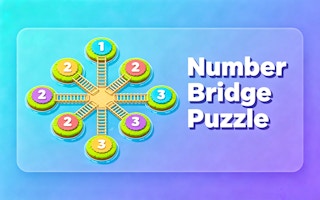
Count every bridge
Number Bridge Puzzle
Drag from one island to a neighboring island
Play loads a game hosted by GamePix that may show ads and use cookies.
Provided by GamePix. Ads and cookies may load only after you press Play. Read the GamePix Privacy and Cookie Policy.
Read each island number as the total bridges it needs.
How to play
How to Play Number Bridge Puzzle
Connect aligned islands, meet each number exactly, avoid crossing bridges, and leave every island reachable through the finished network.
- 01
Read the number on each island as a bridge total. A 1 needs one line, while a 2 may use two different neighbors or a double link to one neighbor.
- 02
Find islands with only one or two possible neighboring directions. Their position often forces more of the answer than a central island with several choices.
- 03
Drag between two aligned islands, or use the gap between them if the player offers tap input. Observe both remaining counts after the bridge appears.
- 04
Revisit a pair only when a second bridge fits both numbers and the rest of the grid. A further input can cycle the pair back, so watch the visual state rather than assuming every action adds a line.
- 05
When all visible requirements appear filled, trace a path through the bridges from one island to every other island. A separate cluster is incomplete even if its own numbers are satisfied.
About the game
Give every island exactly the bridges it asks for
Number Bridge Puzzle places numbered islands on a clear grid. A number states how many bridges must touch that island when the puzzle is complete. You join neighbors in straight horizontal or vertical lines, with no more than two bridges between the same pair. The apparent simplicity hides two separate jobs: satisfy every local count and make the entire set of islands one connected network.
The first board we opened showed islands marked 1 and 2. Dragging from a 1 to an adjacent 2 drew a gold bridge, changed the first count to zero, and reduced the second island’s remaining count to one. That visible response confirms the essential input: choose two aligned neighbors and draw between them. It does not establish that the first puzzle was solved, and later boards may be more demanding.
This is a useful game for players who prefer reasoning to a timer. A productive move makes the options around an island narrower. Each finished count can simplify another island, and the resulting chain gradually turns a crowded grid into a set of small decisions. Do not confuse a visually tidy pattern with a complete answer: count, crossing, and connectivity all matter.
Controls
Controls for Number Bridge Puzzle
- Mouse drag or touch swipe
- Draw a bridge between aligned neighboring islands.
- Repeat the same connection
- Cycle a valid pair through a second bridge and removal while checking the displayed counts.
- Reset or hint button
- Restart or request limited in-game help if a board becomes difficult to untangle.
Useful strategy
Solve by constraints rather than drawing at random
- A corner island marked 1 with only one visible neighbor has an almost immediate answer. Place that line before working on a flexible center island.
- Count capacity as well as demand. If an island needs four bridges and has only two reachable neighbors, both pairs may need double lines, provided nothing crosses them.
- After every line, subtract its contribution from both endpoint islands. A move that fills one island can leave the other needing one more bridge elsewhere.
- Look through the empty corridor before connecting distant islands. A bridge cannot cross another bridge, so an early long line can consume a route another part of the grid needs.
- Pause when a region is fully satisfied. Trace its outgoing links. A closed island group with no path to the rest cannot be the final answer.
- Use a hint as a way to learn the board, not as a substitute for checking why the suggested connection fits the numbers and the network.
How to read a numbered island
Treat an island number as a total of line segments touching it, not the number of destinations it must have. A bridge to one neighbor contributes one; a double connection contributes two. In the opening board, one draw between a 1 and a 2 used the first island’s entire quota but left one unit on the second. That is why reading the remaining counts after each move is more reliable than remembering the original labels.
The number creates a small local equation. Imagine a 3 with one neighbor already linked once. Two bridges remain to allocate across the directions that are still open. If one possible neighbor is full, the other available direction may be forced. You do not need formal algebra; simply ask how many bridge units remain and where they can still go.
A zero or visibly completed island is useful information. Do not add a line just because another island would like one. The new connection must fit both endpoints. If a drag makes a previously satisfied island wrong, remove or cycle that link and reconsider the earlier assumption instead of trying to repair the error elsewhere.
Choose single and double connections carefully
Two aligned neighbors can normally hold one or two bridges. A double connection is powerful when both islands have a high remaining count and few other legal outlets. It is wasteful when one endpoint needs only one, or when using both units would isolate another island. Before doubling, check the values at both ends and the routes needed by nearby islands.
The player may cycle a pair through one, two, and no bridges when you repeat an input. Watch the drawn lines and the number indicators. If you overshoot, continue cycling or use the visible reset control rather than leaving a questionable line in place. The first completed drag is the evidence for drawing a bridge; the exact gesture behavior may vary by device.
Do not mistake geometric closeness for a legal neighbor. Connections run horizontally or vertically along an open line. A diagonally adjacent island cannot be linked by a slanted bridge. Another island between two candidates also makes the farther one a poor target for a direct line. Read the lane before dragging.
Why a perfect set of counts can still fail
Local arithmetic is only part of the puzzle. If you satisfy all the numbers inside a small cluster but give that cluster no bridge to the remaining islands, it becomes a separate network. A final solution requires a route from every island to every other island by following the bridge lines. Check that property before treating a neat-looking board as complete.
An easy habit is to trace a route from the top-left island after several moves. Follow each new branch and ask whether an untouched region can still be reached. If a region has only one possible corridor to the rest, reserve that corridor. Filling both ends of it independently may leave no way to connect the groups later.
Crossings complicate the same question. Two straight bridge lanes cannot pass through each other as an X. When you consider a long connection, inspect any perpendicular line that would intersect it. If both seem required, one of your earlier local assumptions is wrong; return to an island with flexible alternatives before adding more lines.
What to do when the board stops making sense
First, separate a control error from a logic error. If a bridge did not appear, check that the islands are aligned and that the drag reached the second island. If the bridge did appear but the numbers no longer work, count both endpoints again. Removing a mistaken line early is easier than solving around a false premise.
Next, look for an island with few open directions. A flexible 4 in the center can wait; a 1 on an edge often cannot. Fill certain connections and update the neighboring counts. This can create a new forced move without guessing about the entire grid at once.
If all local counts appear right yet the puzzle does not end, inspect connectivity and crossings. Pick one island and mentally walk every line until you have visited them all. Any unreachable group reveals the structural problem. The on-screen hint and reset controls are useful last resorts, but a reset may discard your current board.
Quick answers
Number Bridge Puzzle FAQ
What does each number mean?
It is the total number of bridges that must touch that island. A double link contributes two to each endpoint.
Can bridges cross?
The game rules require noncrossing routes. If two possible lines would form an intersection, reconsider which neighboring pairs actually need bridges.
Why is the board not complete when all counts look right?
The islands also need to form one connected network. Trace from one island and check that no fully counted group is separate.
What happened in the verified first move?
A drag from a numbered 1 to its neighboring 2 produced a visible bridge. Their remaining indicators changed to zero and one.
Should I use a hint?
Use it when you want to check a difficult deduction. Recount the two endpoints and the network after seeing the suggestion so the next move remains your own.
What if a connection is wrong?
The game can cycle a pair of islands through its bridge states. Watch the lines and counts while changing that pair, or reset the board if necessary.
Game information
Game details
Number Bridge Puzzle is played through the official GamePix publisher iframe. The external player may use cookies or show advertising under GamePix terms.
- Distributor and host
- GamePix
More about this game
Keep the break going
Similar games
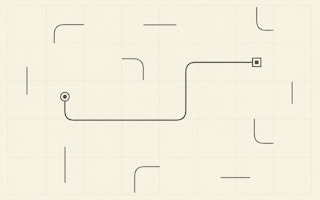
Rotate the complete network
Turnline: Relaxing Puzzle
Rotate line tiles, connect the square and circle endpoints, and finish every required branch.
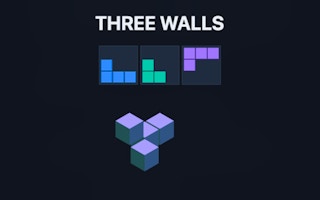
Build three matching shadows
Three Walls
Add blocks at different heights until front, side, and top shadows match the target using the exact block count.