Lanternbloom
Send matching fireflies to the string and light lanterns in a calm color puzzle.
- Session
- Short puzzle levels
- Controls
- Click or tap a firefly
- Best for
- Relaxed
Landscape gives you more room
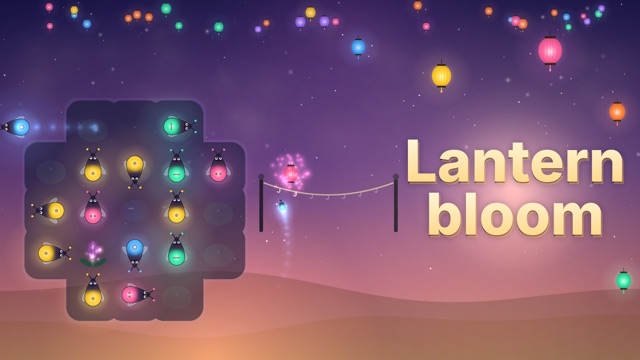
Match fireflies by color
Lanternbloom
Click or tap a firefly
Play loads a game hosted by Playgama that may show ads and use cookies.
Provided by Playgama. Ads and cookies may load only after you press Play. Read the Playgama Privacy and Cookie Policy.
Choose a firefly to send to the string.
How to play
How to Play Lanternbloom
Send fireflies to the string, aiming to put three of one color together.
- 01
Open the official player and wait for the first level and waiting counter to appear.
- 02
Read the tutorial about collecting three fireflies of one color.
- 03
Click or tap one visible firefly; watch it move to the waiting string.
- 04
Check the color and the updated waiting count before choosing another.
About the game
Lanternbloom
Lanternbloom is a small color puzzle built around a very clear action: choose a firefly and send it to a waiting string. The opening level shows seven places to fill and teaches that three fireflies of one color light a lantern. Its quiet presentation makes the first move easy to understand, but the color grouping still deserves attention. A choice changes the waiting row, so look at what is already there before sending the next insect.
Level 1 begins with 0/7 waiting. Click a visible yellow firefly and it moves to the string, raising the counter to 1/7. This gives you an immediate way to check that a selection registered. The useful next decision is whether another visible firefly can help complete a three-of-one-color group; the layout and later rules may change as you continue.
Start with the tutorial instruction rather than guessing at a complicated scoring system. Identify a color you can collect in a group of three, choose one visible firefly, and watch the waiting string after it moves. The string is a useful record of your decisions. If it becomes crowded with unmatched colors, slow down and seek a completing color instead of filling spaces at random. The first selection needs only a tap or click.
Controls
Controls for Lanternbloom
- Click or tap a firefly
- Send it to the waiting string.
Useful strategy
Keep the waiting string readable
- Count the visible waiting places before making a choice.
- Look for a color that can form a group of three instead of collecting every color equally.
- Watch the string after each tap; its contents matter more than a fast tapping rhythm.
- If the next safe choice is unclear, pause and inspect the board rather than guessing.
Understand what the waiting string shows
The waiting count is the first number to read. It was 0/7 at the beginning of Level 1 and 1/7 after a single yellow firefly was selected. The number makes the consequence of a tap visible. You are not moving a character across a map or swapping two adjacent tiles; you are taking one firefly from the scene and adding it to a limited waiting area. That distinction changes how you should plan the next tap.
A seven-place display creates a practical reason to group colors. The tutorial says three of one color light a lantern. If the waiting area contains one yellow, another yellow is more purposeful than an unrelated color when both are available. Follow the live string and tutorial text to see when your own group resolves. The arrangement of remaining colors can change, so base the next tap on what is visible now.
Read the string after each choice. A low waiting count does not mean every next color is equally good. The empty places are a resource, while a partial color group is a task in progress. Keeping those two ideas separate can prevent a row of unrelated insects from occupying the space you need to finish a trio.
Choose a color with a completion path
Begin by scanning the available fireflies for repeated colors. You do not need to memorize every position on the screen. Pick one color, count how many of it you can currently see, and compare that with what is already on the string. If there is a plausible three-firefly group, that gives you a short plan for the next few selections. If several colors repeat, favor the group you can identify most clearly.
Yellow is one available opening color, not a universal best choice. A fresh session may show a different arrangement. Treat color choice as an answer to the current board, not a memorized instruction from someone else’s screenshot.
Color games become easier when you make one small decision at a time. Ask whether the proposed firefly starts a useful group, extends an existing group, or merely consumes a waiting place. The third option may sometimes be unavoidable, but it should be deliberate. A moment of inspection is cheaper than filling several slots and only then discovering that no group is close to completion.
Tap once, then confirm the result
The input is straightforward: click or tap a visible firefly. A selected firefly moves to the string and changes the waiting counter. Together, those are two clear signs that the tap registered. For your own first move, wait until you can see both the level and the waiting counter; clicking during loading tells you little about whether the game works.
After the firefly moves, glance at the waiting row before selecting again. Confirm its color and position. If an animation is still running, let it finish. Rapidly clicking several insects may leave you uncertain about which action caused the row to change. A measured pace is useful here because the puzzle is about limited places and color groups, not reflex speed.
On a narrow screen, the player may scale to fit its container. Aim for the center of the firefly rather than the edge of a decorative glow. If a tap appears to do nothing, first check that the game has finished loading and the chosen insect is part of the active board. Do not infer that the whole game is broken from one missed input.
Plan around the available places
Level 1 has seven waiting places. Think of that count as a capacity limit, not as a target that must be filled as quickly as possible. Each unmatched color you send occupies attention and potentially room. The tutorial’s three-of-one-color rule suggests that completing a trio is more useful than distributing selections evenly across many colors.
A simple planning exercise is to count partial groups. If you have two of a color waiting, look for a third before starting another pair. If you have one of several colors, examine which of those colors is easiest to extend from the current scene. When your first trio forms, watch how the string changes before planning the next color; do not assume a clearing order from the opening instruction alone.
When you are unsure, stop tapping. Unlike a timing challenge, the useful action is often observation. Recount the waiting insects, compare colors with those still available, and choose a move with an explicit purpose. This habit turns a seemingly casual color game into a manageable sequence of small decisions.
Avoid common early errors
The most likely mistake is choosing fireflies just because they are close or bright. A click can be valid while still making the color plan harder. If your string contains several single colors, try to complete one existing group before adding yet another color. The tutorial gives you the relevant rule; the decorative scene can wait while you read the row.
A second mistake is treating the 1/7 counter as a score. It was labeled waiting in the opening level, and it rose after one insect moved. It reports occupied waiting places at that moment. Do not compare it with a score, an elapsed timer, or the number of lanterns without evidence from the live UI. The distinction matters because a higher waiting count is not automatically progress.
If a later level introduces a new rule, read its own instruction before applying the opening routine. The reliable part of this guide is the habit of counting colors and checking the string after each move.
A calm routine for the first session
Set up a short loop: read the string, scan for a repeat color, tap one firefly, and read the string again. The loop keeps your attention on the two things you can verify at once: which color you selected and what the waiting area now contains. The first selected firefly makes the waiting count 1/7, so you can practice the loop immediately.
As you continue, use the three-of-one-color rule as a planning goal. When a likely trio is visible, complete it deliberately. When it is not, avoid filling the waiting area without a reason. If a match changes the row, pause to learn from the change before moving on. Each new board state is fresh information, not a command to click faster.
If you want another matching puzzle afterward, the related games below use their own goals and counters. Carry over the habit of reading the current objective, but do not assume their swaps or clears work like Lanternbloom’s waiting string. Here, the first useful achievement is simply making an intentional color choice and seeing how the player responds.
Quick answers
Lanternbloom FAQ
How do I move a firefly?
Click or tap a visible firefly. It moves to the waiting string and changes the opening counter from 0/7 to 1/7.
What lights a lantern?
The opening tutorial says that three fireflies of one color light a lantern.
Is there a fixed best opening color?
No fixed opening color was verified. Choose based on the colors visible in your current level and the contents of your waiting string.
Game information
Game details
Lanternbloom runs in Playgama’s official player, which may use cookies or show advertising.
- Developer
- Dalbit Games
- Distributor and host
- Playgama
More about this game
Keep the break going
Similar games

Swap sweets and reach the goal
Candy Match
Swap adjacent candies, build matches, and complete each score and collection target within the move limit.

Make every swap count
Glintwell Match
Swap adjacent gems to make groups of three and reach the score target with limited moves.