Candy Match
Swap adjacent candies, build matches, and complete each score and collection target within the move limit.
- Session
- Short match-3 levels
- Controls
- Drag one candy toward an adjacent candy
- Best for
- Puzzle
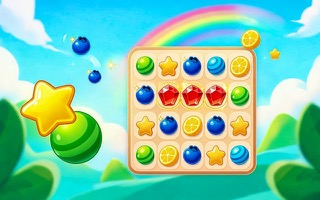
Swap sweets and reach the goal
Candy Match
Drag one candy toward an adjacent candy
Play loads a game hosted by GamePix that may show ads and use cookies.
Provided by GamePix. Ads and cookies may load only after you press Play. Read the GamePix Privacy and Cookie Policy.
Read the score, collection target, and move limit before starting.
How to play
How to Play Candy Match
Read the target, swap adjacent candies to create matches, and use the limited move count to finish every required score or collection goal.
- 01
Press Play on the title screen, choose the open chapter level, and read the goal panel before spending energy.
- 02
Note the score target, required candy type, required quantity, and total moves. The opening level asks for 4,500 points and 24 red gems in 26 moves.
- 03
Drag one candy onto an adjacent position. The swap remains only when it forms a valid match, and matched pieces leave the board.
- 04
Pause after cascades because falling candies may create extra matches or change the best next move. Recount the target pieces that are now available.
- 05
Use a booster only when its effect fixes a specific obstacle or protects a nearly complete objective; ordinary levels should first be approached with normal swaps.
About the game
A bright match-3 campaign where every swap must serve the level goal
Candy Match uses the familiar rule of swapping adjacent pieces to form a horizontal or vertical line of three or more. The first level adds two clear objectives: reach a score of 4,500 and collect 24 red gem candies within 26 moves. That combination matters because a visually large match can still be a weak turn if it does not help the required collection. The goal panel shown before play is the most important planning screen in each level.
The campaign is organized on a chapter map, with later levels unlocking after earlier stages. Energy is used to enter a level, and the start panel also offers optional boosters. Once the board opens, the remaining moves, score, collection progress, and goal bar stay visible above the grid. The best play comes from reading those counters after every cascade and choosing the next swap for the actual objective rather than for color alone.
Controls
Controls for Candy Match
- Mouse
- Drag a candy toward an adjacent candy to swap their positions.
- Touch
- Swipe one candy one space up, down, left, or right; tap map, level, and booster buttons.
Useful strategy
Candy Match tips for more reliable runs
- Start by finding swaps that include the required candy type.
- Prefer one move that advances both the score and collection counters.
- Check the whole board after a cascade, including newly exposed target candies, instead of repeating the first local pattern you notice.
- Matches of four can create stronger pieces, so compare setup value with the immediate target.
- Keep the lowest rows active when possible because changes there can trigger longer cascades above.
- Do not spend a booster simply because it is available; save it for a board state it clearly improves.
- With few moves left, calculate the remaining target per move and stop chasing unrelated bonuses.
- If a level fails, decide whether the issue was target selection, board reading, or spending moves on setup that never paid off.
Turn the goal panel into a move budget
The pre-level panel separates the objectives from the decoration around them. Read the score, collection count, and move limit as one combined problem. If 24 target candies remain with 26 moves, most turns must either collect a target or create a reliable setup for several targets. A swap that scores points without moving the collection counter needs a clear reason.
During the level, translate the counters into a simple budget. Divide the remaining collection by the remaining moves and notice whether the pace is comfortable. The calculation does not predict cascades, but it shows when optional setup has become too expensive. With a generous margin, you can prepare a four-match. With a narrow margin, take direct target matches first.
Some moves advance both goals naturally. Matching the required red gems also adds score, and a cascade may add more. These double-purpose turns are the foundation of efficient play. When choosing between two valid swaps, prefer the one that removes required pieces, opens space near more required pieces, or drops them into matchable positions.
Scan in a fixed order before dragging
A crowded board invites tunnel vision. Use a consistent scan: check immediate target matches, then four-piece opportunities, then the lower rows, and finally moves that reposition isolated target candies. This takes only a moment and prevents a quick decorative match from consuming a valuable move.
Look one square beyond the match itself. When three pieces disappear, candies above them fall. A move near the bottom changes more of the board and may generate cascades, while a move at the top changes less. Bottom play is not automatically correct, but it deserves extra attention when it includes the target color or opens a blocked column.
After the board settles, start the scan again. Do not assume the plan from before the cascade is still best. New adjacent pairs may appear, a target gem may fall into a ready match, or a special piece may become available. The pause between moves is free; use it to replace habit with current information.
Build special matches without losing the objective
The tutorial points toward a four-piece match, showing that larger alignments can create stronger effects. A special piece is valuable when it clears target candies, opens a constrained area, or helps the score fast enough to justify the setup. Its value comes from what it will hit, not from the animation alone.
Before making a setup move, confirm that the second step is likely to remain available. A cascade can change the board and break a fragile plan. Prefer setups that already include useful target pieces or that create multiple possible completions. If the level is close to ending, a direct match may be safer than a two-move special that has no guaranteed target.
When a special is ready, inspect its row, column, or surrounding area before activating it. Try to align the effect with a high concentration of required candies. If the target is scattered, wait only when the board offers a clear way to improve the alignment; otherwise use the special while it still creates space and score.
Use boosters as problem-solving tools
The level panel offers items such as a bomb, rainbow effect, and extra moves, while the board shows tools including Hammer, Shuffle, Swap, and Blast. Treat each as a limited resource. Read the label and current count, then choose it only for a defined purpose. A booster spent without a target is difficult to evaluate and easy to waste.
A shuffle helps when useful swaps have become scarce or targets are trapped in an unproductive arrangement. A direct removal tool is strongest on a piece that blocks a near-complete objective. Extra moves matter when the remaining goal is realistically achievable with a small extension. None of these should replace careful scanning while the normal board still offers progress.
When a level fails, review booster timing separately from swap quality. If the board was healthy until the final two moves, a saved tool might have converted the attempt. If progress was poor from the start, adding a booster may only hide weak target selection. Fix the recurring decision first, then use items to handle unusual board states.
Quick answers
Candy Match FAQ
What is the goal in Candy Match?
Each level shows its own score and collection goals. The opening level requires 4,500 points and 24 red gem candies.
How do I move a candy?
Drag or swipe one candy onto an adjacent square. The swap must create a valid match.
How many moves are in the first level?
The opening level begins with 26 moves.
Should I use boosters immediately?
No. Choose a booster when it solves a specific board problem or makes a nearly complete goal reachable.
Does Candy Match work on touchscreens?
Yes. The board uses short directional swipes and the menus use taps.
Game information
Game details
Candy Match is provided through the GamePix-hosted player.
- Distributor and host
- GamePix
More about this game
Keep the break going