Cubes Match 3 Quest
Swap neighboring elemental tiles to form lines of three and reach the target before moves run out.
- Session
- Short puzzle levels
- Controls
- Drag between adjacent tiles
- Best for
- Casual
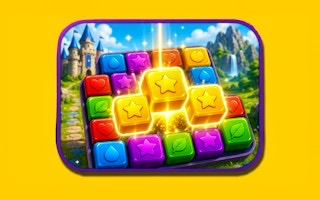
Match the elements
Cubes Match 3 Quest
Drag between adjacent tiles
Play loads a game hosted by GamePix that may show ads and use cookies.
Provided by GamePix. Ads and cookies may load only after you press Play. Read the GamePix Privacy and Cookie Policy.
Choose an unlocked level and check the target and moves.
How to play
How to Play Cubes Match 3 Quest
Swap neighboring cubes to form horizontal or vertical groups of at least three identical symbols, wait for the board to settle, and reach the level target within the available moves.
- 01
Choose an unlocked level and read its objective before touching the grid. Level 1 asks for 2,000 points in eight moves, so you can judge every result against a visible score and move budget.
- 02
Scan the 9-by-9 board for two identical cubes with a one-cell gap, or for a pair that can receive a third matching cube from an adjacent position. Confirm the symbols as well as the colors.
- 03
On desktop, press a cube and drag it toward an adjacent cube to exchange their positions. A useful swap must complete a horizontal or vertical line of three or more identical cubes.
- 04
Release the input and let the matched cubes clear. Watch the score update, the move counter decrease, and the cubes above fall into the emptied cells.
- 05
Wait until the falling and any follow-up clearing have finished. Rescan the settled board instead of trying to use a cube whose final position is still changing.
- 06
Repeat with the remaining objective in mind. Prefer moves that score now and leave useful near-matches, while avoiding speculative swaps that spend the limited budget without a clear benefit.
About the game
Build cube matches while every swap spends a move
Cubes Match 3 Quest is a level-based match-3 puzzle played on a board of colorful symbol cubes. Swap two neighboring cubes to place three or more identical cubes in a horizontal or vertical line. The matched group clears, cubes above fall into the open spaces, and new pieces enter the board. Each settled board becomes a new search rather than a continuation you can read perfectly in advance.
Level 1 begins on a 9-by-9 grid with a target of 2,000 points and eight moves. That makes each exchange part of a small budget. In the opening layout, moving a blue water-drop cube left into a neighboring red fire cube's space completed a horizontal blue match. The clear raised the score from 0 to 180, reduced the counter from eight moves to seven, and changed the board as pieces fell.
The official instructions describe matches of three or more, combinations, and level targets. A larger match can be more valuable than the first trio you notice, but a plan must begin with a legal adjacent swap. Read both color and symbol—the board includes water drops, fire, leaves, eyes, mountains, brown triangles, and other designs—then compare the score still required with the moves still available before committing.
Controls
Controls for Cubes Match 3 Quest
- Mouse drag
- Drag one cube toward an adjacent cube to swap their positions on desktop.
- Touch drag
- On the listed mobile and tablet versions, drag a cube toward a neighboring cube to attempt the same swap.
Useful strategy
Find one-move matches, then judge what the falling cubes may open
- Scan in rows first, then columns. A repeatable pass finds simple one-gap patterns faster than staring at the whole 9-by-9 board at once.
- Match symbols as well as colors. The water drop, fire, leaf, eye, mountain, and triangle designs give you a second way to identify identical cubes on a busy grid.
- Before dragging, name the exact line the move will complete. If you cannot point to the resulting trio or larger group, inspect the exchange again before spending a move.
- Prefer a move low on the board when two options look equally useful. A lower clear lets more cubes fall and can change several rows, creating more opportunities to inspect after settlement.
- Wait for all movement to stop before planning the next swap. A destination that appears open during a fall may contain a different cube once the board finishes updating.
- Compare points needed with moves remaining after every clear. If the target is still far away, look for larger groups or a move that sets up a strong next turn instead of repeating small isolated matches.
- Keep near-matches visible. Two identical cubes separated by one cell, or an L-shaped group missing one corner, can guide the next exchange after the board settles.
- Treat the optional Watch Ads +5 offer as a choice, not part of the basic plan. Build your strategy around the moves currently shown and read any offer before deciding whether to use it.
Turn visible patterns into legal adjacent swaps
A match is only one move away when a neighboring cube can enter the missing place in a row or column. Look for patterns such as two identical symbols beside each other with a third copy directly above or below one end. You can also find two matching cubes with a one-cell gap and check the four neighbors around that gap for the required third cube. These small shapes convert a crowded board into specific candidates.
Check the exchange itself, not only the final line. The cube you want to move must be directly beside its destination. A matching symbol two cells away cannot jump across the middle cube. Trace the planned motion with your eyes: start cube, neighboring destination, completed group. This prevents a promising pattern from becoming a wasted or irrelevant attempt.
Use a fixed scan order when no match stands out. Read the first three rows from left to right, then continue downward; afterward scan the columns from top to bottom. Pause at pairs, repeated symbols, and one-cell gaps. A systematic search may feel slower than guessing, but under a limited move count it protects the resource that matters most: purposeful swaps.
Use both color and symbol to avoid false matches
The cubes are designed with distinct colors and pictures. Blue water drops and red fire symbols are easy to separate, but relying on color alone becomes less dependable when several bright pieces sit together or when your attention moves quickly. Confirm the icon inside each cube before forming a plan. Three matching colors only count as the intended group when the cube designs are identical.
Symbols also help you track a cube through a swap. In the Level 1 opening, the important piece is a blue water drop next to a red fire cube. Dragging the blue cube left places it beside two other blue drops, so the line clears. Thinking “move the drop into the fire's cell” is more precise than remembering only “move blue left,” especially when other blue pieces are visible nearby.
After cubes fall, rebuild your map from the settled symbols. Do not assume a green leaf or eye remains in the same row simply because you noticed it before the clear. Gravity changes vertical positions, and new pieces can enter from above. Rechecking both picture and position keeps the next move tied to the current board rather than an outdated mental image.
Measure each result against the remaining move budget
Level 1 makes the tradeoff concrete: 2,000 points must be earned with eight starting moves. The verified opening blue trio produces 180 points and leaves seven moves. That result establishes a useful baseline for the current board, but it does not guarantee that every trio or later level uses the same value. Read the live score after each clear and calculate how much progress remains.
When the target is distant, compare more than one available match. A basic trio offers dependable progress. A move that creates four or more identical cubes, joins a larger pattern, or positions another near-match may offer a better route, consistent with the official emphasis on combinations and higher scores. Choose from what the visible board supports; do not spend several moves preparing a vague combo whose completion you cannot trace.
As moves run low, shorten the plan. Favor the clearest scoring swap, let it resolve, and check the new gap between score and target. If the result opens a follow-up match, take it only after confirming the settled symbols. The move counter is a planning limit, not a reason to rush the input. A careful exchange takes little time and protects one of the few remaining chances.
Let the board settle before building the next plan
Cleared cubes leave holes, pieces above descend, and the updated grid can create new alignments. This is why the best follow-up is often found in the columns affected by the last clear. Begin your rescan there. Look for newly adjacent identical symbols, then widen the search to neighboring rows and the rest of the board if nothing useful appears.
A lower-board clear affects more cells above it than a similar match near the top. That can reveal more possibilities, but the exact incoming order is not something you need to predict. Judge the move first by the match it definitely creates and the target progress it can provide. Treat any useful alignment formed by the fall as a new opportunity to evaluate after it becomes visible.
Do not drag during the falling animation. Even if two cubes briefly pass through an attractive arrangement, wait for their final cells. Once the motion and score feedback finish, check rows, columns, target, and moves in that order. This small pause keeps your plan synchronized with the actual grid and makes chained board changes easier to understand.
Quick answers
Cubes Match 3 Quest FAQ
How do you make a match in Cubes Match 3 Quest?
Drag one cube toward an adjacent cube so the exchange creates a horizontal or vertical line of at least three identical cubes. The group then clears and the board refills from above.
What is the goal of Level 1?
Level 1 starts with a target of 2,000 points and eight moves on a 9-by-9 board. Use scoring matches efficiently and recheck both counters after every clear.
What happens after a match clears?
Cubes above the empty cells fall, new pieces may enter, and the score updates. Wait for all movement to finish before choosing the next adjacent swap.
Do matches need the same color or the same symbol?
Look for identical cubes, using both their color and their symbol. The pictures help distinguish water drops, fire, leaves, eyes, mountains, triangles, and other pieces across the grid.
Should I always take the first three-cube match I see?
Not always. Compare visible choices for group size, board position, and a clear follow-up, but take a dependable match when moves are low or a larger plan is uncertain.
Do I have to use the Watch Ads +5 option?
No. It is an optional offer shown below the board. Plan around the moves currently available, and only consider the offer after reading what the hosted game presents.
Game information
Game details
Cubes Match 3 Quest is developed by video-igrice and provided through the GamePix-hosted player. The external player may display advertising and is governed by GamePix's privacy terms.
- Developer
- video-igrice
- Distributor and host
- GamePix
More about this game
Keep the break going