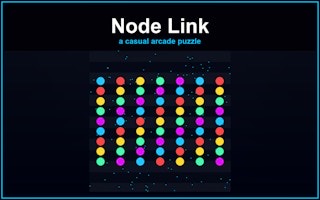
Node Link
Drag through neighboring same-color nodes, close loops, and reach the target before time runs out.
- Session
- 1 min
- Controls
- Mouse drag or touch swipe
- Best for
- Quick
Connect the colors
Node Link
Mouse drag or touch swipe
Play loads a game hosted by GamePix that may show ads and use cookies.
Provided by GamePix. Ads and cookies may load only after you press Play. Read the GamePix Privacy and Cookie Policy.
Trace neighboring nodes of one color and release to clear the path.
How to play
How to Play Node Link
Drag through neighboring nodes of one color, release completed paths to clear them, and use full loops when available to reach the level target within 60 seconds.
- 01
Read the target and timer, then scan the board for obvious same-color neighbors. Begin with a route you can see clearly rather than searching the entire grid for a perfect chain.
- 02
On desktop, press and hold the mouse on a node, drag across neighboring nodes of the same color, and release when the path is complete.
- 03
On mobile, swipe through neighboring nodes of one color. Keep the gesture controlled so the path follows the nodes you intended to include.
- 04
After release, watch the linked nodes disappear and the nodes above fall. Rescan the changed columns because the new arrangement may create a longer connection or the beginning of a loop.
- 05
When one color forms a route that can close back on itself, complete the full loop to clear that matching color across the board and earn the loop bonus.
- 06
Keep checking the remaining target against the remaining seconds. Favor a ready path when time is short, and pursue a loop when its closing route is already clear.
About the game
Connect same-color nodes before the one-minute clock expires
Node Link is a timed connect-the-dots puzzle played on a grid of brightly colored nodes. Press a node and drag across neighboring nodes of the same color to build one continuous path. Release to clear the linked group, add to the target progress, and let the nodes above fall into the empty spaces.
Each level gives you 60 seconds and a score target. Level 1 begins with a 7-column by 9-row board and a target of 120, making the opening challenge easy to read but quick enough that every drag matters. A useful move should earn progress while also leaving a board with several visible same-color neighbors for the next path.
Full loops add another layer of strategy. When a same-color route bends around and closes into a loop, the game clears that matching color across the board for a larger bonus. Straight paths are reliable and fast; loops can transform the grid. The central decision is whether the current loop is close enough to finish without wasting the time needed for several certain connections.
Controls
Controls for Node Link
- Mouse press and drag
- Link neighboring nodes of the same color on desktop.
- Release the mouse button
- Submit the completed path and clear its linked nodes.
- Touch swipe
- Link neighboring same-color nodes on a mobile or tablet screen.
Useful strategy
Clear certain paths quickly and build loops from visible shapes
- Start your scan near clusters, bends, and corners where one color already has several neighboring options. These shapes offer more choices than isolated pairs.
- Trace the whole intended path with your eyes before pressing. A short pause before the gesture prevents a mid-drag search that consumes more time.
- Release a clear route instead of stretching toward a doubtful final node. The falling pieces may create a better connection immediately afterward.
- Rescan the columns that changed after every clear. Gravity can place two matching nodes together even when they were separated before the move.
- Look for loops that are nearly closed. A compact route with an obvious return is more practical under the timer than a wide detour with uncertain links.
- When only a small amount remains on the target, take the first dependable scoring path. Finishing the level matters more than preserving a promising board shape.
Scan the grid in a repeatable order
A 7-by-9 board contains enough nodes that random searching can consume a meaningful part of a 60-second round. Use a consistent scan: check the lower rows, move through the center, then inspect the upper area. You are looking for adjacent copies of one color, especially clusters with more than one possible direction.
Separate ready paths from possible paths. A ready path consists of neighbors you can trace immediately. A possible path depends on pieces falling into place after another clear. Take the ready score first when the target needs progress, then return to the changed area to see whether the possible route has formed.
Do not count nodes that the drag cannot actually connect. Similar colors elsewhere on the board may look like part of one large group, but the path must travel through neighboring same-color nodes. Follow the continuous route with your eyes and ignore matching pieces separated by another color.
Build clean paths without hesitating mid-drag
Once you choose a color, identify a clear starting end and the order of the nodes. Press the first node, hold the input, and move steadily through the route. A horizontal row of same-color neighbors can be collected in one continuous motion, but bent and branching groups require you to choose the order before the drag begins.
Prefer a path your hand can trace comfortably. A longer connection is useful only when you can complete it without losing the route or spending too many seconds correcting the pointer. Several confident paths can advance the target more reliably than one ambitious gesture that never reaches a clean endpoint.
Release deliberately after the final intended node. The disappearance, floating score feedback, and target change confirm that the path registered. Then move your attention away from the old route; the falling nodes have already changed the most relevant part of the board.
Create full loops from compact same-color routes
A loop needs a same-color path that can travel around a shape and close back into itself. Start with clusters that already bend instead of trying to force a loop from a straight line. Trace the outward side, the turn, and the return connection before pressing so the gesture has a clear closing point.
The reward is broader than an ordinary path: the official rule states that a completed loop clears the whole matching color from the board and awards a large bonus. That can remove nodes far from the drawn route and cause several columns to fall at once, so expect to rebuild your reading of the grid after the clear.
Balance loop value against time. If the closing node is obvious, the color-wide clear can make strong target progress and refresh much of the board. If the route needs uncertain detours, take a simpler path and use the resulting fall to search again. A loop opportunity should emerge from the layout rather than consume the entire round.
Use the target and timer to choose the next move
The target tells you how much progress the current level still requires; the timer tells you how selective you can afford to be. Early in the minute, take quick visible paths while learning which colors are clustering. This both adds score and creates falling movement that may form a later loop.
Around the middle of the round, compare the remaining target with the board quality. If several useful paths are visible, continue clearing at a steady pace. If the grid is fragmented, choose the connection that changes the most crowded columns and immediately inspect the new neighbors created by the fall.
In the final seconds, shorten the decision cycle. Stop scanning for a perfect color-wide move and clear the best certain path already visible. Check the target after each release and begin the next route from the area you were already watching. Fast recognition and clean input are more valuable than a complicated plan that the clock will not allow you to finish.
Quick answers
Node Link FAQ
How do you connect nodes in Node Link?
Press and drag through neighboring nodes of the same color on desktop, or swipe through them on a touchscreen. Release when the intended path is complete.
What happens after a path clears?
The connected nodes disappear, the target progress increases, and nodes above the cleared spaces fall. Scan those changed columns for the next same-color route.
How long is a Node Link level?
Each level uses a 60-second timer. Reach the displayed target before the timer expires by clearing ordinary paths and useful full loops.
What does a full loop do?
Closing a full loop clears that matching color across the board and awards a larger bonus. Look for compact same-color shapes with a visible return connection.
Should I always wait for a loop?
No. Clear reliable paths to keep the target moving, especially when the board is fragmented or time is short. Pursue a loop when the closing route is already easy to see.
What is a good first move on Level 1?
Scan the 7-by-9 grid for a clearly connected same-color group and clear it with one controlled drag. Then inspect the columns that fall before choosing the second route.
Game information
Game details
Node Link is developed by lixing and provided through the GamePix-hosted player. The external player may display advertising and is governed by GamePix's privacy terms.
- Developer
- lixing
- Distributor and host
- GamePix
More about this game
Keep the break going