Island Siege
Send troops along connected routes and turn neighboring islands into a stronger position.
- Session
- 3–10 min
- Controls
- Click a friendly base, then a connected target
- Best for
- Strategy
Landscape gives you more room
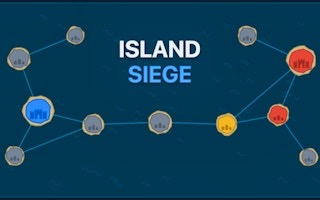
Plan your next island
Island Siege
Click a friendly base, then a connected target
Play loads a game hosted by GamePix that may show ads and use cookies.
Provided by GamePix. Ads and cookies may load only after you press Play. Read the GamePix Privacy and Cookie Policy.
Compare the numbers on linked islands before sending troops.
How to play
How to Play Island Siege
Select one of your blue bases, choose a connected target, and evaluate both the destination and the base you leave behind before ending the turn.
- 01
After Tap to start, read the stage, turn number, island colors, displayed counts, and every visible connection. Treat the map as a route network rather than a loose collection of targets.
- 02
Identify your blue base and compare it with nearby neutral or opposing positions. The opening blue base shows 3, while connected neutral islands can show 2 or 3 and the red base shows 3.
- 03
Tap the blue base you want to use. Confirm that it is visibly selected before choosing a destination, especially when several lines meet near the same island.
- 04
Tap a target connected by a visible line. Units travel from the selected base toward that target; watch the full result before planning a second action.
- 05
Recount the map after the move and mark both the sending and receiving islands as spent for this turn. A freshly captured island is a foothold for a later turn, not a launch point for an immediate relay.
- 06
Before using End Turn, inspect every blue position, exposed connection, and reachable red or neutral base. Use the displayed Undo (AD) option only if you accept its current availability conditions; check the advertising prompt before continuing.
About the game
Expand across connected islands one deliberate move at a time
Island Siege is a turn-based territory strategy game on connected islands. Your objective is to control every island while protecting your castle: losing the castle ends the game. Blue marks your starting position, neutral islands offer expansion targets, and red marks the opposing side. Read the numbers and the links between islands before committing your troops.
The core input is explicit: tap a base, then tap a target. In the opening move, selecting the blue base with 3 and then the adjacent neutral base with 2 sends units along the connecting line. The neutral island changes to blue with 1 remaining, while the original blue base becomes empty. That result shows why expansion cannot be judged only by gaining another island; the move also changes what remains behind.
Movement uses a whole island force, not a portion you choose. According to the official rules, both the island sending troops and the island receiving them become spent for that turn. You cannot push the same force through several linked islands in one turn. Plan an advance across successive turns, and keep separate unspent bases available when coordinating attacks.
Controls
Controls for Island Siege
- Tap or click a base
- Select the blue island position from which you want units to move.
- Tap or click a target
- Send all troops from the selected base to a linked target; both islands are then spent for the turn.
- End Turn
- Use the visible turn control after you have reviewed the resulting map state.
- Undo (AD)
- Use the labeled option only when it is offered and its current conditions are acceptable to you.
Useful strategy
Count what the move leaves behind as carefully as what it gains
- Read the origin and destination together. Capturing a neutral island can open a useful route while an empty starting base creates a weak point on another connection.
- Prefer moves with a clear positional purpose: gaining a junction, approaching a useful route, or creating room to reinforce later. Check that the newly reached island leaves a useful onward route and a manageable position behind it.
- Use the visible connection lines to limit your analysis. Compare realistic targets from the selected base instead of planning moves between islands that the current map does not connect.
- Recount after every movement. The opening result leaves 1 on the captured island and zero at the origin, so relying on the old numbers would immediately distort the next decision.
- Treat equal or near-equal counts cautiously. Prefer a clear numerical advantage when another reachable target offers one, and avoid committing your only strong base to an uncertain matchup.
- Check town resources before ending the turn. Building uses resources but does not spend a troop move, so review available construction without losing track of castle defense.
Read the island network before selecting a base
Start with topology: which islands are connected, which bases sit at the end of a route, and which act as junctions. A junction can offer several future choices, while an endpoint may be easier to understand but less flexible. This route structure gives strategic meaning to bases that otherwise look similar by number alone.
Then add ownership and counts to the map. Blue marks your current positions, neutral marks unclaimed positions, and red marks the opposing side in the opening. Read the displayed values without assuming that color alone determines safety. A low-value junction and a higher-value endpoint ask different questions about opportunity and exposure.
Finally, trace what each move would leave behind. Selecting a base commits that origin to the movement shown by the game. The opening blue 3 moving to neutral 2 emptied the origin, so the route behind the advance deserves attention before you decide that the closer neutral base is automatically the best first target.
Compare troop strength before choosing a target
Numbers provide the clearest visible comparison. In the opening action, 3 moves against a neutral 2 and the destination becomes a blue 1. That result is a useful planning example: a larger force takes the island, and the remainder shown there is small. Check the strength left on the captured island before committing it to another move; a new blue foothold can still be vulnerable.
When one force is not enough, look for two unspent bases linked to the same target. The official instructions describe a coordinated attack: the first force weakens the target, then the second captures it. Check both origins before starting, because each sends its entire force and neither can be used again that turn.
Counts also matter after movement. Ask whether the new island has a useful position for the following turn and whether the old island remains protected. A successful attack can still expose your castle if it drains the base guarding the only approach. Winning another island never justifies overlooking that immediate loss condition.
Expand through routes that improve your next decision
A neutral island is most useful when it changes what you can do next. Before attacking, follow its outgoing lines. A capture that reaches a junction may create several later options; a capture on a dead-end route may still be valuable, but it should justify the troops moved and the origin emptied.
Build a short route plan across turns rather than racing toward every neutral island. Name the first destination and the routes it opens on a later turn. Since receiving troops spends the destination too, keep an independent unspent base ready for any other movement you intend to make this turn.
Red positions affect route value even before you challenge them directly. Note which neutral islands lie between blue and red, and which lines could bring the colors closer. Use that proximity to review defensive exposure, while letting the current board reveal the timing of any later response.
Balance a new foothold against an empty origin
The opening capture demonstrates a central tradeoff. Blue gains control of the neutral 2 island with 1 left, but the original blue base becomes empty. Visually, the color has expanded; structurally, strength has shifted forward. Evaluate both changes before calling the move safe.
Look at every line touching the origin. If the emptied base sits on a route that matters, plan around that exposure when the game offers another action or turn. If it is an endpoint behind the new foothold, the risk may be different. The connection map tells you where the weakness can matter.
Avoid spreading small numbers across many islands merely to increase the amount of blue on screen. Several weak positions may create more routes to monitor without giving any one position a useful margin. Expand when the new base improves access or control and the remaining network still has a coherent shape.
Run a complete board review before End Turn
The visible End Turn control creates a natural decision checkpoint. Before choosing it, recount all blue, neutral, and red bases and note which values changed. Verify the selected move reached the intended island and identify any blue origin that became empty. This prevents a fast click from hiding the consequence of the last action.
Trace the routes from the weakest blue position outward. Ask which connected island would matter most if the board changes on a later turn. Keep the most exposed connection in mind as you advance the turn, so you can respond to changes without having to reconstruct the whole map.
Also review your towns and available resources. The official description says towns provide resources for cities, walls, and pastures, and building does not consume a troop move. Inspect the displayed costs and options before ending the turn, while preserving the castle defense that keeps your game alive.
Quick answers
Island Siege FAQ
Why can I not move from an island that just received troops?
Receiving troops spends that island for the current turn, just as sending troops does. Plan its next movement for a later turn; use another unspent base if you need a second attack now.
How do I win, and what ends the game?
Take control of every island to win. Losing your castle ends the game, so check the routes leading to it before sending a defending force elsewhere.
Does building use a troop move?
No. The official rules separate building from troop movement. Towns supply resources for cities, walls, and pastures; check each displayed cost before choosing what to build.
How do you move units in Island Siege?
Tap or click one of your blue bases, then tap a target connected by a visible line. Watch the units travel and read the resulting numbers before choosing another action.
What happens in the opening 3-versus-2 move?
In the Stage 1 opening, moving from blue 3 to an adjacent neutral 2 changes the target to blue 1 and leaves the original base empty.
Should I capture the nearest neutral island first?
Only when its count, connections, and effect on the origin support your plan. A nearby capture can still expose the base that supplied the units.
What do the connection lines mean for strategy?
They show the visible routes between island bases. Use them to identify candidate targets, junctions, endpoints, and positions that could become exposed after movement.
Is Undo free in Island Siege?
The interface labels the option Undo (AD). Read its current availability and advertising condition rather than assuming it is free, unlimited, or always usable.
Game information
Game details
Island Siege is provided through the GamePix-hosted player. The external player may display advertising and is governed by GamePix's privacy terms.
- Developer
- nextlayer
- Distributor and host
- GamePix
More about this game
Keep the break going