Elemental Monsters: Merge
Combine elemental creatures, arrange your army, and prepare for the next battle.
- Session
- 1–5 min
- Controls
- Drag matching units to merge
- Best for
- Puzzle
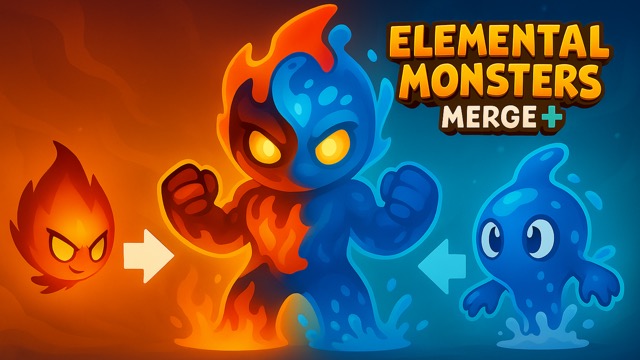
Elemental Monsters: Merge
Elemental Monsters: Merge
Drag matching units to merge
Play loads a game hosted by Playgama that may show ads and use cookies.
Provided by Playgama. Ads and cookies may load only after you press Play. Read the Playgama Privacy and Cookie Policy.
Combine elemental creatures, arrange your army, and prepare for the next battle.
How to play
How to Play Elemental Monsters: Merge
Acquire elemental units, merge useful combinations, arrange a balanced army, and strengthen the lineup before sending it into battle.
- 01
Inspect the current army before spending coins. Compare the frontline's staying power, the damage behind it, and any empty slots that could support another unit or merge path.
- 02
Combine identical units when the stronger result improves an important role and the merge does not leave another lane or position exposed.
- 03
Try cross-element combinations deliberately. Read the resulting warrior's characteristics and decide where that unit contributes more than the two separate pieces would have.
- 04
Use coins to buy, sell, or upgrade around a clear need. Add durability when the army collapses early, or add damage and attack speed when it survives but cannot finish the opposition.
- 05
Open available chests and reassess the board before spending the proceeds. A new unit or bonus may create a better merge than the purchase you originally planned.
- 06
Enter the next battle with at least one follow-up plan. After the result, identify the first weak point and change that part of the army rather than rebuilding everything at once.
About the game
Build an elemental army through deliberate merges
Elemental Monsters: Merge by DudaGames combines army management with automatic battles. You prepare a group of fire, water, earth, and air creatures, merge units to create stronger fighters, and protect the island from an opposing army. Each unit has health, damage, and attack speed, so a lineup is more than a row of identical power numbers.
Matching identical units increases their strength, while combining units from different elements can create distinct warriors. Coins support buying, selling, and upgrading heroes, and chests can provide extra coins and bonuses. These systems create a practical choice before every battle: concentrate resources into fewer advanced units or keep enough bodies and roles to maintain a balanced formation.
Good progress starts with the board you have, not the rare unit you hope to obtain. Preserve merge options, notice which fighter is failing first, and spend to solve the current weakness. A controlled merge plan turns crowded slots into useful power; random combining can leave expensive units stranded without partners or remove a role the army still needs.
Controls
Controls for Elemental Monsters: Merge
- Mouse or touch
- Select, move, buy, sell, upgrade, or merge units through the on-screen army controls.
- On-screen battle controls
- Start the next encounter after checking the lineup and available resources.
Useful strategy
Merge to fix the army's next problem
- Keep at least one realistic merge pair developing. Filling every slot with unrelated units may increase the headcount while making the next upgrade difficult to reach.
- Watch which fighter is removed first in battle. That moment reveals whether the formation lacks durability, placement support, or enough damage to reduce incoming pressure.
- Do not sell a lower-tier unit only because it looks weak. If a matching copy is likely to complete a useful merge, the pair may be worth more than the immediate coins.
- Compare the result of a cross-element merge with the roles you lose. A distinctive warrior is helpful when it strengthens the lineup, not merely because the combination is new.
- Spend after evaluating the whole board. One targeted purchase that completes a merge can outperform several disconnected units that consume space and delay future combinations.
- Change one major variable after a loss. Adjust a merge, upgrade, purchase, or placement choice, then observe the next battle so you know which decision improved the result.
Read health, damage, and attack speed as roles
Health helps a unit remain in the fight, damage determines the impact of each successful attack, and attack speed affects how often that impact occurs. A single large number does not describe the whole contribution. A durable fighter may buy time for faster attackers, while high damage matters less if the unit is removed before it can act effectively.
Judge units in the context of the lineup. If opponents reach fragile fighters immediately, adding more damage may not solve the problem. Strengthen or preserve a unit that holds the fight together. If the frontline survives while the enemy army remains standing, improve the damage output behind it instead.
After battle, remember the order in which your formation weakened. The first collapse usually offers the clearest diagnosis. Later losses may simply follow from that gap, so repairing the earliest failure is more informative than upgrading whichever surviving unit has the most impressive statistics.
Plan identical-unit merges without emptying the field
An identical-unit merge concentrates value into one stronger monster and frees space, but it also turns two bodies into one. Make sure the improved result can carry the role that both units previously served. If the army relies on covering several positions, wait until another unit can fill the opening.
Build toward pairs rather than buying unrelated units whenever the board is crowded. Identify the pieces one copy away from a merge, then compare which completed pair would solve the next battle's weakness. This keeps spending tied to an achievable result instead of a vague hope that every purchase will eventually connect.
Do not merge automatically the instant a pair appears. First check whether one unit is currently needed in a separate lane or position. The merge may still be correct, but seeing the temporary coverage cost lets you rearrange or purchase support before entering the next fight.
Evaluate cross-element warriors by what they replace
A cross-element combination should be judged as an army decision, not a collection entry. Before merging, note the two roles currently provided by the source units. Afterward, compare the new warrior's durability, output, and speed with the jobs that disappeared. A powerful result can still create a weakness elsewhere.
Use cross-element merges when they give the formation something it lacks or consolidate two redundant roles into a more useful one. If the army already performs well in that area, keeping the original units may preserve flexibility for another battle or later merge.
Experiment in controlled steps. Try one unfamiliar combination, place it where its characteristics can matter, and watch the next encounter. This gives you a practical comparison. Merging several pairs at once makes it difficult to learn which new warrior helped and which change reduced the army's balance.
Treat coins and board space as one budget
Coins purchase options, while open slots let you use those options. Spending everything on units that cannot merge may leave no room to reorganize. Before buying, identify the destination slot, the likely partner, and the role the unit should fill. A purchase without all three answers can wait.
Selling can release both coins and space, but it permanently removes a possible merge component. Favor selling isolated units that do not support the current plan, especially when their slot blocks a near-complete pair. Preserve pieces with clear partners or roles unless the immediate resource need is stronger.
Chest rewards can change the best purchase. Open an available chest before committing the last coins, then scan for new pairs and useful combinations. Reordering the decision this way prevents you from paying for a unit that the reward has just supplied or made unnecessary.
Use battle results as a lineup report
Enter battle with one question, such as whether the frontline survives longer after a merge or whether a faster attacker contributes before being removed. Watch for that result first. The spectacle contains useful information only when you know which comparison you are making.
A narrow loss does not require a total rebuild. Improve the earliest failing role, complete a nearby merge, or change one placement. A heavy loss may justify a larger resource cycle, but even then preserve the parts of the lineup that performed their jobs.
After a win, inspect the army before repeating the same plan automatically. Later opposition may pressure a different role, and new resources may enable a cleaner formation. Keep the successful core while using open slots and coins to prepare the next improvement rather than waiting for the current lineup to fail.
Quick answers
Elemental Monsters: Merge FAQ
How do merges work in Elemental Monsters: Merge?
Identical units can combine into a stronger monster, while units from different elements can produce distinct warriors. Compare the result with the two roles and positions you are giving up.
Which elemental unit should I upgrade first?
Upgrade the role limiting the current army. Add durability if the formation collapses before dealing damage, or improve output when your units survive but cannot finish the enemy group.
Should I merge every matching pair immediately?
Check the formation first. A merge increases one unit's power and opens a slot, but it can also remove coverage from a position that still needs a separate fighter.
When is selling a unit useful?
Sell when an isolated unit blocks space and does not support a likely merge or needed role. Keep a lower-tier piece when a realistic partner could turn it into a valuable upgrade.
What should I watch during a battle?
Notice which unit or position fails first and whether the remaining army has enough time to respond. That early weakness gives you a focused target for the next purchase, merge, or upgrade.
What are coins and chests used for?
Coins support buying, selling, and upgrading units. Chests can provide extra coins and bonuses, so open available rewards before finalizing a spending plan.
Game information
Game details
Elemental Monsters: Merge is developed by DudaGames and provided through the Playgama-hosted player. The external player may display advertising and is governed by Playgama's privacy terms.
- Developer
- DudaGames
- Distributor and host
- Playgama
More about this game
Keep the break going
Similar games

DesignVille: Merge & Design
DesignVille: Merge & Design
Merge tools and materials, fill client orders, and work on a growing collection of interior design projects.

Pick the counter element
Element Clash 2D
Choose Fire, Water, or Earth against the bot using the visible circular advantage rules.