Domino Online Multiplayer
Match dotted tiles at either end of the chain and practice against computer opponents.
- Session
- 3–10 min
- Controls
- Click or tap a tile and a matching chain end
- Best for
- Board
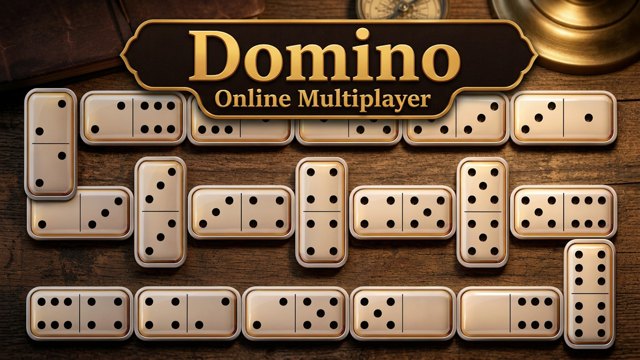
Domino Online Multiplayer
Domino Online Multiplayer
Click or tap a tile and a matching chain end
Play loads a game hosted by Playgama that may show ads and use cookies.
Provided by Playgama. Ads and cookies may load only after you press Play. Read the Playgama Privacy and Cookie Policy.
Choose Play with computer and an opponent for solo practice.
How to play
How to Play Domino Online Multiplayer
Match a number on one of your seven tiles to an open end of the chain, then plan the new end so your remaining hand stays playable.
- 01
Choose a mode and settings. Start with computer practice if you want a predictable opponent while learning. Review the current hint and special-double penalty options before starting because they affect the round you are about to play.
- 02
Read the seven-tile starting hand. Count how often each number appears, identify doubles, and notice which numbers connect several of your tiles into a possible sequence.
- 03
When it is your turn, inspect both open ends of the chain and click a legal matching tile. If the game offers a placement choice, prefer the end that leaves a useful number available for your next turns.
- 04
Watch which half remains open after the tile is placed. The new number changes which parts of your hand can connect on later turns.
- 05
Use the bazaar when no tile in your hand matches either open end. Continue according to the game's prompt until you receive a playable tile, then place it.
- 06
Win the round by emptying your hand. If the round blocks with an empty bazaar, compare the pips left in each hand. Continue across rounds while avoiding a 100-point penalty total.
About the game
Empty your tile hand before penalty points accumulate
Domino Online Multiplayer is a turn-based domino game built around extending one shared chain. Each player starts a round with seven tiles. On your turn, choose a tile whose number matches one of the chain's open ends and place it on that end. The first player to use every tile wins the round, so every useful placement should reduce the hand while preserving future options.
If neither open end matches a tile in your hand, draw from the bazaar until a playable tile appears. If the bazaar is empty and neither player can move, the round is blocked; the player with the lower total of remaining pips wins that round. The losing hand adds penalty points, and the overall game ends when a player reaches 100 penalty points and loses.
Computer play provides a dependable place to learn the interface and test tile-order decisions. The current menu shows nine named computer opponents with ratings from 1000 to 2350. It also displays online-duel, friend-link, and one-screen choices, but access to those modes and the presence of a live opponent can vary. Treat a visible mode as an invitation to try it rather than a promise of immediate real-player matching.
Controls
Controls for Domino Online Multiplayer
- Click or tap a legal tile
- Play it on the matching chain end selected by the game.
- Bazaar button
- Draw when neither open end matches your hand.
- Hint icon
- Check any video requirement or remaining uses before requesting a suggestion.
- Undo control
- Use the displayed undo option when the current mode permits it.
Useful strategy
Shape the open ends around the numbers you still hold
- Count number coverage, not just individual good tiles. A number that appears across several tiles can act as a bridge that keeps the hand moving through multiple turns.
- Avoid exhausting your only copy of a number without checking what it exposes. A placement that looks easy now can leave an open end that none of your remaining tiles can answer.
- Use doubles deliberately. They are less flexible because both halves show the same number, but playing one at the right moment can preserve a mixed tile for a later change of direction.
- Reduce high-pip liabilities when two moves are otherwise similar. If the round blocks, every remaining pip matters. Check the opening options to see whether extra penalties for 0-0 or 6-6 apply to the current game.
- Notice when the opponent cannot answer an open-end combination. That pass or draw suggests a shortage, although any tile drawn from the bazaar may immediately change the situation.
- Practice without relying on hints for every turn. Make a choice first, state why it helps your remaining hand, and then use a hint as a comparison when the option is available.
Read the seven-tile hand as a network of numbers
Instead of looking for a single playable tile, map how the numbers in your hand connect. A tile such as 2-5 can link a group of twos to a group of fives. If several tiles share those numbers, you may be able to keep playing even as the chain changes. Isolated tiles deserve attention because they need the table to reach an exact number before they can leave your hand.
Count copies of each number across both halves. A heavily represented number gives you control only while the chain can be steered toward it. A number shown once is a fragile bridge: spending it may disconnect part of the hand. This count does not predict every draw, but it gives each placement a purpose beyond removing one tile.
Separate doubles from mixed tiles. A double does not change the number at the chosen end, while a mixed tile can switch that end to another number. Keeping at least one useful switch can rescue a hand when the opponent pushes the chain away from your strongest group.
Choose the chain end that protects your next move
When both open ends accept tiles from your hand, compare the resulting chain rather than placing the first match. Ask which play leaves an end you can answer again. A move that removes one tile but strands the remaining six may be weaker than a move that preserves a two- or three-tile route.
Also consider the opponent's recent behavior. If they had to draw when the ends were 2 and 4, returning the chain to that pair may create pressure. The evidence is temporary because the bazaar can supply a missing number, but it is more useful than guessing without reference to previous turns.
Do not force a preferred end when the other choice removes a dangerous tile. Near a possible blocked round, reducing the pip total can matter more than maintaining a long internal sequence. Recalculate as the bazaar shrinks and the hands become shorter.
Use doubles to hold a number or remove a liability
A double matches its own number on both halves, so placing it keeps that end on the same value. Use this when you have more tiles containing the number or want to save a mixed tile as a later switch.
The same rigidity creates risk. If you play a double and the opponent changes the end immediately, your planned follow-up may disappear. Before committing, check whether the other open end gives you a fallback. Doubles work best as part of a sequence, not as a hope that the table will remain unchanged.
The opening settings can add 25 penalty points for 6-6 and separately add 25 for 0-0. Check both switches before starting and plan an early exit for whichever special double carries the extra penalty.
Respond to the bazaar and the risk of a blocked round
Drawing is required when neither open end matches your hand. After receiving a tile, do more than place it mechanically: see whether its other half connects to tiles you already hold. A forced draw can create a new bridge, so reorganize your plan around the added number before the next turn.
As the bazaar empties, a block becomes more plausible. Lower the hand's pip total when you cannot see a reliable route to emptying it. This is especially relevant when both players still hold several tiles and the chain keeps returning to a narrow pair of numbers.
If the round blocks, the lower remaining pip sum wins. Therefore a player who cannot go out may still improve the outcome by releasing a large tile. Distinguish the primary plan, emptying the hand, from the fallback plan, holding the cheaper blocked hand.
Use computer practice to test one decision rule at a time
Computer mode lets you repeat the full cycle without waiting for another player. In one round, focus on counting number coverage. In another, focus on keeping a mixed tile as a switch. A narrow practice goal makes it easier to see whether the decision rule improves the hand.
Hints can help when enabled and offered, but compare them with your own move instead of clicking first. Choose a tile, predict the resulting open ends, and identify your follow-up. Then check whether the suggested move reveals a connection or danger you missed. The interface does not establish unlimited free hints, so treat the displayed availability as the current limit.
The interface lists multiple computer difficulty levels. Move upward when you can explain most placements and recover from changed ends without repeated hints. Difficulty labels describe the opponent setting; they do not change the underlying need to match numbers and manage the hand.
Understand what the listed multiplayer choices mean
Available menu choices include online duels, friend-link play, and one-screen play alongside the computer option. Online duel attempts depend on service availability and another suitable player, so use computer practice when you want to begin immediately.
Friend-link play uses a shared invitation, while one-screen play is intended for people using the same device. Follow the prompts for the selected mode and finish the current setup before switching to another format.
Quick answers
Domino Online Multiplayer FAQ
How do I play a tile in Domino Online Multiplayer?
Choose a tile with a number matching either open end of the chain, then place it on that end. Check which number the placement leaves open for the next turn.
How many domino tiles does each player start with?
Each player starts the round with seven tiles. The player with the lowest double, excluding the blank double, starts under the rules shown for this game.
What happens when I cannot make a move?
Draw from the bazaar until the game provides a playable tile. If the bazaar is empty and nobody can move, the lower remaining pip total wins the blocked round.
Can I practice against the computer?
Yes. Computer play is the reliable practice option and lets you learn chain placement without waiting for another player.
Does the game offer online or friend play?
The game lists online duels, friend-link play, and one-screen play. Online matching still depends on the external service and opponent availability, so a match is not guaranteed.
How does the overall game end?
Penalty points accumulate across rounds. Under the displayed rules, a player who reaches 100 penalty points loses the overall game.
How do the special penalties for 0-0 and 6-6 work?
The opening screen provides separate switches that can add 25 points for 6-6 and 25 for 0-0. Check the current settings because the extra penalties are configurable rather than fixed for every game.
Game information
Game details
Domino Online Multiplayer is provided through a Playgama-hosted player. Listed multiplayer modes depend on the external service and do not guarantee immediate matching.
- Developer
- Smartberry
- Distributor and host
- Playgama
More about this game
Keep the break going