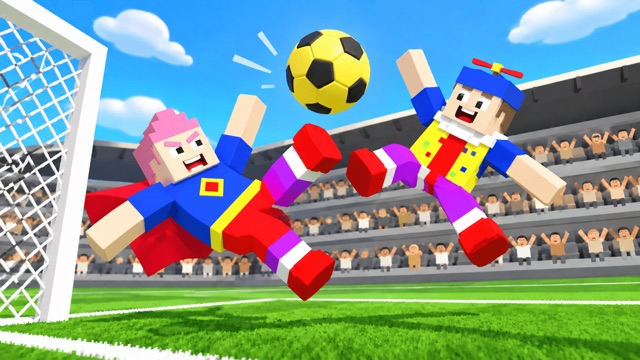
Curve Kick
Aim a free kick, strike with Space, and score before defenders close the shooting lane.
- Session
- Short sessions
- Controls
- Use arrow keys to adjust aim
- Best for
- Skill

Bend a shot past the wall
Curve Kick
Use arrow keys to adjust aim
Play loads a game hosted by GamePix that may show ads and use cookies.
Provided by GamePix. Ads and cookies may load only after you press Play. Read the GamePix Privacy and Cookie Policy.
Press Play to enter the first stadium and read the goal layout.
How to play
How to Play Curve Kick
Press Play and inspect the wall, goalkeeper, target goal, and dotted aim line.
- 01
Use the arrow keys to adjust the displayed line toward an open section of goal.
- 02
Press Space once to kick and watch the ball travel.
- 03
Check the score and goal counter to see whether the attempt succeeded.
- 04
If the shot misses or is blocked, change the next line based on the ball path.
- 05
Continue through the visible goal objective without assuming a single trajectory works at every stadium.
About the game
What to do in Curve Kick
Curve Kick puts a free kick in front of you, with a defensive wall and goalkeeper between the ball and the goal. In the tested opening, pressing Play entered Level 1 in Munich. The dotted aiming line pointed left of the keeper; pressing Space launched the ball, then the score advanced from zero to 100 and the goal count from zero of eighteen to one of eighteen. This confirms that the basic aim-and-kick loop can score. It does not prove that every shot from the same starting line will score.
The official listing describes eighteen goals and defenders that approach, across a series of stadiums. For a first attempt, concentrate on the local geometry: where the wall stands, what part of the goal is visible, and whether the dotted line leads into space. The game rewards an aimed shot, not a hurried press. Use the outcome of each kick as feedback. If the ball goes toward a defender, change the line. If it misses the frame, make a smaller correction rather than reversing the whole angle.
Controls
Controls for Curve Kick
- Arrow keys
- Change the free-kick aim before shooting.
- Space
- Strike the ball along the selected line.
- Dotted line
- Preview the current aim; confirm its usefulness by watching the actual ball.
Useful strategy
Useful decisions during a short run
- Aim beside the wall instead of straight through it.
- Watch the goalkeeper as well as the goal opening.
- Use small angle corrections after a near miss.
- Read the score and goal count after the ball settles, not while it is still in flight.
- Keep the shot routine simple: inspect, aim, kick, observe, adjust.
- If defenders move closer, prioritize a clear available lane over a perfect-looking shot that takes too long.
Read the goal before choosing an angle
Start by locating the ball, the defensive wall, the goalkeeper, and the portion of goal you can actually target. The wall and keeper solve different problems for the defense. The wall blocks direct paths from the ball; the goalkeeper can cover a gap that looks open from farther away. An effective line needs to pass the wall and still reach a part of goal the keeper cannot easily cover. Do not judge a shot only by the first obstacle.
The dotted line gives you a preview of aim. Use it as a planning aid, not as a promise of an exact final position. In the tested first attempt, the line pointed to the left of the keeper, and the subsequent Space kick scored. That is one observed outcome. A different keeper position or later level may require another angle. The useful lesson is to seek open space and check the actual ball path after the kick.
If the wall fills the center, start by looking at the sides. An outside lane may give the ball a cleaner approach, though it can also become a miss if you aim too far outward. Compare how much goal remains on the chosen side. Aim for a margin inside the post rather than at its exact edge when you are learning the controls. Small adjustments let you understand how a change in the line affects the result.
Build a repeatable shot routine
A good attempt has five short steps: inspect the current defensive shape, set the line, kick, observe the ball, and compare the result with your aim. Using the same routine each time prevents frantic corrections that are hard to learn from. If the game shows defenders approaching, be deliberate but do not spend so long chasing a perfect line that the available lane changes. Choose a reasonable gap and test it.
Use the arrow keys before Space. The observed player accepted a Space kick and updated the score only after the ball traveled into the goal. Avoid pressing Space repeatedly while the shot is in motion. Wait until the result is clear and the next attempt is ready. The game may reset the ball or change the scene; read the current line again. A successful previous shot is information, not a permanent input sequence.
After a blocked shot, identify the first obstacle. Did the wall meet the ball, did the keeper reach it, or did the path simply leave the goal frame? Each result calls for a different correction. Move away from the wall if it was struck; pick a less protected part of goal if the keeper saved it; move inward if it missed outside. This cause-based adjustment is more efficient than making a large random swing after every failure.
Track success with the actual counters
The tested first goal changed the score from zero to 100 and the objective from zero of eighteen to one of eighteen. Those counters are a stronger sign of success than a ball that merely looks close to the net during flight. Read the display after the animation finishes. If the count does not change, treat the attempt as unsuccessful even if the line looked promising. Then make a specific correction for the next kick.
Eighteen goals make consistency useful. You do not need to invent eighteen different trick shots; you need to recognize which gaps are available as the scene changes. Start from a reliable side of the wall when it is open, then adjust as defenders and goalkeeper positions demand. Keep the counter in view so you know whether a change improved your completion rate or just produced an attractive shot.
A stadium change may alter the view or defensive arrangement. Re-run your visual scan rather than copying the previous arrow presses exactly. The official listing advertises multiple stadiums, but the short test only reached the first. No later keeper pattern or scoring value is assumed here. Use the same observation method in each new scene: find obstacles, aim through space, fire once, and verify with the goal count.
Learn from a missed or blocked ball
A near miss is valuable because it shows the scale of correction needed. If the ball passes just outside a post, adjust a small amount toward the center. If it strikes the keeper, a tiny change may still be inside the keeper's reach, so consider another side or a clearer height if the controls permit it. If it hits the wall immediately, the line never reached the goalkeeper problem; solve the wall first.
Do not confuse a line that visually crosses the goal with a guaranteed score. Perspective, ball curve, and moving defenders can make the outcome different from a simple static preview. Judge the attempt by the ball's visible path and the counter. If input seems unresponsive, ensure the game is active and not on a menu or result screen, then make a single clear arrow adjustment before the next kick. Repeated keys while an animation runs are hard to diagnose.
For a useful short practice session, aim to score one confirmed goal, then see whether the same reasoning works on the next arrangement. The verified first attempt shows the loop is playable, not that the full eighteen-goal objective has been completed. As levels change, keep the decision small: find one open route, test it, read the result, and revise that route. This keeps the challenge readable even when the defense appears crowded.
Quick answers
Curve Kick FAQ
How do I kick?
In the tested desktop player, use arrow keys to adjust the dotted aim and press Space to shoot.
What proves a goal counted?
The tested first shot raised the score to 100 and the goal counter to one of eighteen after the ball entered.
Should I copy the first aim every time?
No. Recheck the wall and keeper because later arrangements may differ.
What if I hit the wall?
Change the line to clear the first obstacle before worrying about the keeper.
Game information
Game details
Curve Kick runs in the official GamePix-hosted player. Airy Arcade does not host its game code.
- Distributor and host
- GamePix
More about this game
Keep the break going